

If you have been diagnosed with sleep apnea, you were likely told there is one primary solution: a CPAP machine. For decades, continuous positive airway pressure (CPAP) has been considered the gold standard for treating obstructive sleep apnea. And while CPAP can be highly effective, especially in severe cases, there’s an important truth that often gets overlooked: many patients simply cannot tolerate it. The mask, the pressure, the noise. Many patients feel like the treatment is harder to live with then the condition itself. What often isn’t discussed is that CAP is NOT the only option. For many patients, there is a more comfortable, more natural alternative that can be just as life-changing, and far easier to use – a custom sleep apnea appliance.
Studies and real-world experience consistently show that long-term compliance with CPAP hovers around 25 to 30%. That means most patients either struggle with it or stop using it altogether. The reasons are understandable: the mask can feel intrusive, the airflow can be uncomfortable, and the machine itself can disrupt sleep rather than improve it. So, what happens to the patients who don’t tolerate CPAP? Too often, they’re left feeling stuck, believing they have no other viable options. But that’s simply not true.
A different approach: Custom oral sleep appliances
As a dentist who focuses on sleep-disordered breathing and TMJ health, I work with patients every day who are searching for a more comfortable, sustainable solution. And as a patient who also has mild sleep apnea, I needed to find a treatment that was not only going to manage this life-threatening condition, but also one that would work for me. One of the most effective alternatives, particularly for mild to moderate sleep apnea, is a custom-made oral sleep appliance (See Figure 1). Unlike over-the-counter devices, these appliances are precisely designed to fit your bite, your jaw position, and your airway needs. They work by gently repositioning the lower jaw forward during sleep, helping to keep the airway open and reducing collapse that leads to apnea events. These appliances are easy to wear, extremely comfortable, and will stop your snoring and sleep apnea from occurring. This will result in more consistent airflow, improved oxygen levels, and better quality sleep without the need for a mask or machine.
CPAP vs. oral appliance: Understanding the trade-offs
It’s important to be clear: CPAP is highly effective when it’s used properly. For patients with severe sleep apnea who can tolerate it, CPAP can be life-changing and remains an excellent option. However, effectiveness only matters if the treatment is actually used. Custom oral appliances have a significantly higher compliance rate at around 95%. Patients often find them easier to travel with, more comfortable to wear, and far less disruptive to their lifestyle. There’s no noise, no mask, and no hose; just a discreet, precisely engineered device. Additionally, when properly designed and monitored by a trained dentist, these appliances can be adjusted over time to optimize results while minimizing side effects.
CPAP users may experience dry mouth, nasal irritation, skin issues from the mask, and general discomfort. Many patients feel claustrophobic while wearing the CPAP or disrupt their bed partners at night leading to failure with the device. Oral appliances, on the other hand, can sometimes cause temporary jaw soreness, bite changes, or tooth movement if not properly managed. This is why customization and ongoing care are critical. A properly trained dentist will not only design the appliance correctly but will also monitor your TMJ health, bite stability, and airway improvement over time. The goal is not just treatment, it’s long-term success.
Choosing the right treatment for you
The most important takeaway is this: sleep apnea treatment should not be one-size-fits-all. If you have severe sleep apnea and are doing well with CPAP, that’s excellent. You should absolutely continue with what works. But even in those cases, having a custom oral appliance as a backup for travel or occasional use can be incredibly valuable. In addition, many studies show that combined therapy, wearing a sleep appliance with CPAP, also increases success with CPAP allowing lower pressures and jaw support adding comfort for patients.
If you have mild to moderate sleep apnea or if you’ve tried CPAP and found it difficult to tolerate, a custom oral appliance may not just be an alternative; it may be the better solution for you. Studies show that a custom sleep appliance is superior to CPAP for mild and moderate sleep apnea with less long-term side effects. Regardless, the best treatment is the one you will use consistently, night after night.
Sleep apnea is a life-threatening medical condition and needs to be properly addressed. Treating sleep apnea isn’t just about reducing numbers on a sleep study, it’s about restoring your energy, protecting your long-term health, and improving your quality of life. Our snoring and sleep apnea patients tell us that our sleep appliance changed their lives. If you are suffering from poor sleep quality, you also deserve options that truly work for you.
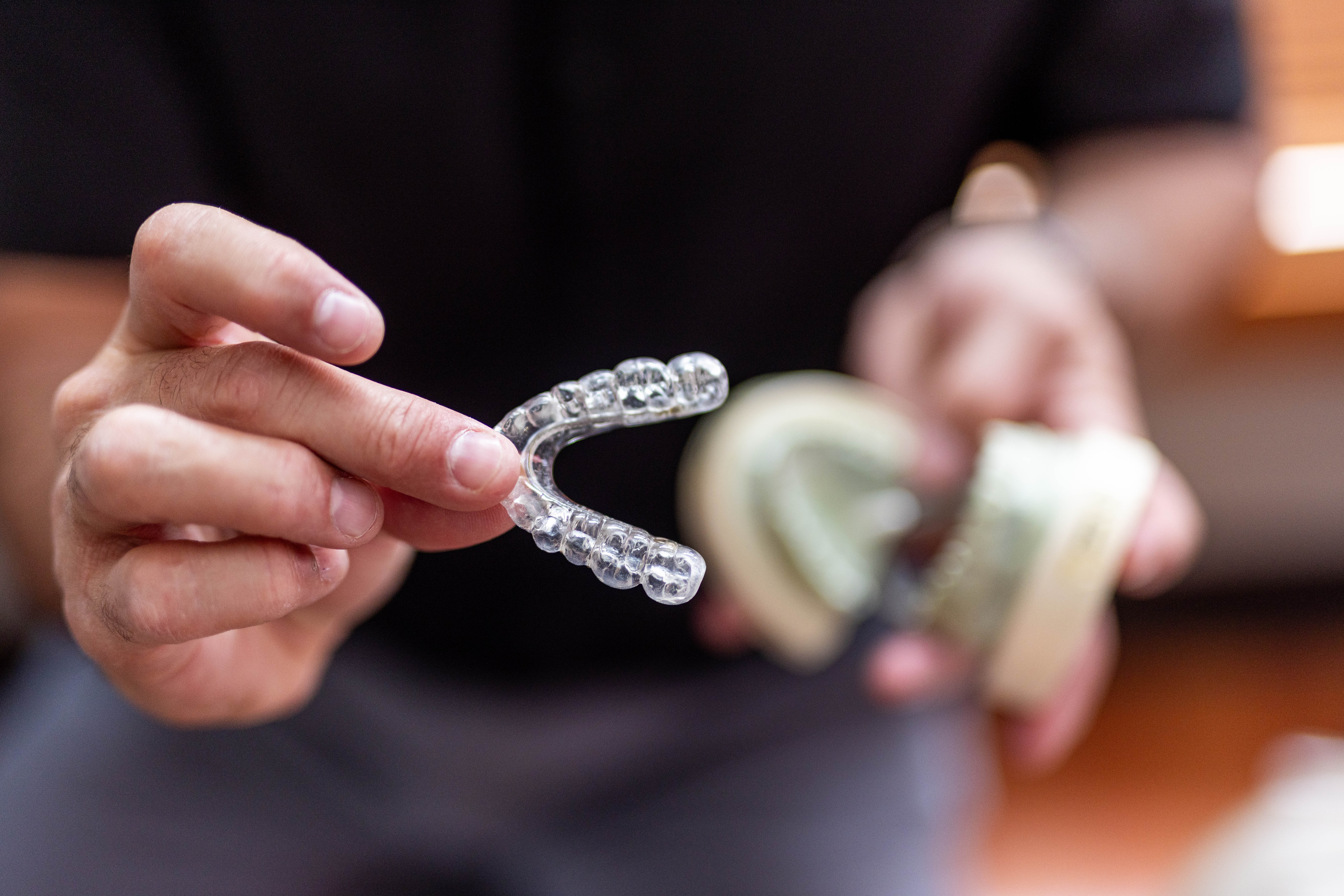
Figure 1: Custom Sleep Apnea Appliance
Dentally Speaking by Jeffrey S Haddad D.D.S. Originally published in Community Lifestyles.