



If you’ve ever broken or even chipped a tooth and had no idea how it happened, or if your dentist keeps mentioning gum recession or bone loss even though you brush and floss religiously, it might be time to look at something that’s often overlooked: your bite. Most dentists are trained to diagnose gum disease and tooth disease, however, many have not been trained in “bite disease”.
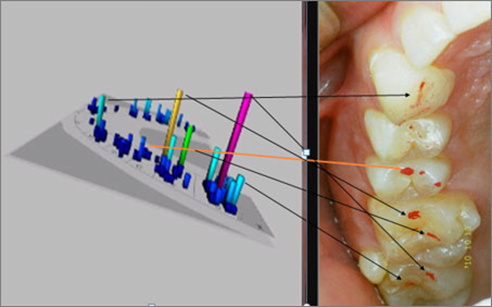
Computerized Technology to identify bite misalignment
Now, misaligned bite might not sound very serious—maybe just something a little off with how your teeth come together. But in reality, how your upper and lower teeth align and come together can have a massive impact on your dental health. Many patients can go years without realizing that their bite is the root cause of their recurring dental issues. Unfortunately, the consequences can be more than just frustrating; they can be painful, expensive, and emotionally draining.
We had a patient recently who had been to many different dentists’ over the years. She was told to get crowns, fillings, even root canals, which she did. But those procedures still didn’t help her teeth problems. But no one ever asked her how her teeth felt when she closed her mouth, or whether she felt tension in her jaw when chewing. No one looked closely at the wear on her teeth. By the time she came to us, she had gum recession on several teeth, a broken molar, and jaw pain that was starting to give her headaches.
The diagnosis? A misaligned bite or what dentists call “malocclusion.”
Why is a stable bite so important?
When your bite is off, the pressure of everyday chewing doesn’t distribute evenly. Instead, certain teeth absorb more force than they were designed to handle. Over time, this can cause a cascade of problems:
- Gum recession: Excessive pressure on certain teeth can cause the surrounding gum tissue to pull back. You might start to notice sensitivity or even the appearance of longer teeth. Many people assume this is just part of aging. It’s not.
- Bone loss: As gums recede, the underlying bone can begin to erode as well. This weakens tooth stability and can eventually lead to tooth loss if left untreated.
- Broken or cracked teeth: Uneven force can lead to tiny cracks in teeth, which will grow over time. This may result in teeth that chip, break, or require crowns or even tooth loss.
- TMJ symptoms: A misaligned bite doesn’t just affect your teeth; it affects your entire jaw system. Patients with misaligned bites often suffer from temporomandibular joint (TMJ) issues, which can cause jaw pain, ear aches, clicking sounds, and even migraines.
One of the biggest concerns we hear from new patients is that their previous dentist “never really explained what was going on”. A lot of dental problems linked to bite alignment don’t show up clearly on a standard x-ray or during a routine cleaning.
That’s why we take the time to actually listen to our patients. Do they wake up with jaw tightness? Are certain teeth always sensitive even though there’s no cavity? Have they been grinding or clenching at night? These seemingly small details are clues that something bigger might be going on.
Fixing the root cause, not just the symptoms
Once a misaligned bite has been identified as the underlying issue, we can discuss options to help solve the problem. And yes, there are options. Using computerized technology, we can analyze a person’s bite showing specific percentages of pressure on teeth and giving objective data on any imbalances in the mouth. This technology is essential in identifying bite misalignment, but also extremely helpful in showing patients the same data as well.
If you feel like you are continuously patching up problems but never feel like you’re getting to the bottom of them, it could be your bite. A healthy bite is about more than just a straight smile. It’s the foundation of your dental health, and if it’s not aligned, it can silently or not so silently wreak havoc on your gums, your teeth, and your jaw.
Bite disease is a very common issue, and it can progressively get worse leading to many issues. The good news is that once you have identified this problem, there are solutions.
Dentally Speaking by Jeffrey S Haddad D.D.S. Originally published in Community Lifestyles.